
One Year Later, Jurors are Still Reluctant to Serve During the COVID Pandemic (Part 1)
April 13, 2021
Over one year has passed since New York City became an epicenter of the Coronavirus pandemic, accounting for 5% of global cases,[1] and jurors are still reluctant to serve on a jury. In June 2020, DRC conducted a survey of 420 jury-eligible respondents in the counties that comprise the Southern District of New York and the Eastern District of New York to evaluate New Yorkers’ willingness to serve on a jury.[2] DRC’s June 2020 survey found that jurors were extremely anxious about serving on a jury and reluctant to come to court. Recently, in March 2021, DRC conducted a follow-up survey of 403 jury-eligible respondents in New York County and found that jurors are still very concerned about jury service because of COVID-19.
New Yorkers have been deeply impacted by the pandemic and remain fearful of the virus. At the time of the 2021 survey, three vaccines were on the market, and approximately 22% of New York County had been vaccinated. Regardless, respondents had the same level of concern about contracting the virus as they did at the peak of the pandemic; 83% of the 2020 survey respondents were moderately or extremely concerned that they or someone they know will contract COVID-19, while 82% of the 2021 survey respondents answered in the same way.
Like the 2020 respondents, most of the 2021 respondents said they were anxious to serve on a jury, due to fears about contracting the virus.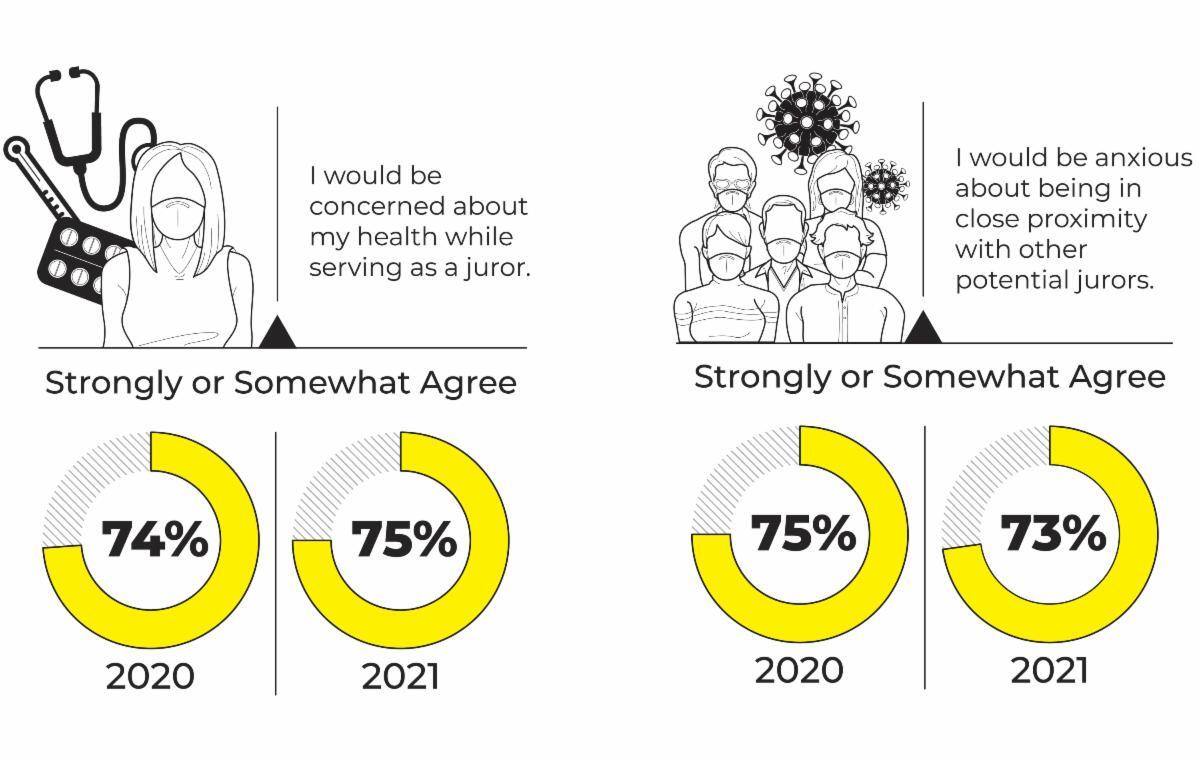
Prospective jurors are concerned about their safety in the courthouse and there have been numerous reported incidents of jurors falling ill during trial. While in some cases, the court has been able to replace a juror who has fallen ill, such as a recent proceeding before Judge Rakoff in the Southern District of New York,[3] there is a risk of a mistrial due to jurors getting sick. For example, in a civil case in the Eastern District of Texas, where precautions were taken, such as plexiglass around the witness box, a juror reported testing positive for COVID-19 after one week of trial.[4] Ultimately, a mistrial was declared, but fifteen participants in the trial ended up with COVID-19, including six court staff, another juror, audiovisual technicians, and members of both the defense and the plaintiff’s teams. Mistrials have been declared by judges in New York, Indiana, Colorado, and Missouri—specifically because trial participants tested positive for the virus or had symptoms.
Judges are aware of the health concerns of holding in-person trials and have adjusted accordingly. A landmark trial against opioid makers initially set for March 2020 was postponed again nearly a year later. The presiding judge, Suffolk County Supreme Court Judge Jerry Garguilo, cited COVID-19 concerns as the reason for the postponement; “If we were to start on [March] 29th we could not comply with the COVID restrictions . . . The court is concerned with the health and safety of the personnel here, all of you, and the jurors.”[5] Judge Garguilo also cited recent court cutbacks of staff—from 60% personnel levels to 40%—as an additional reason for delaying the trial.
In DRC’s latest survey, respondents also expressed anxiety about jury duty-related health concerns. As compared to the 2020 respondents, a lesser percentage—but still the majority—of the 2021 respondents expressed concern about having to take public transportation to commute to the courthouse and being in the courthouse even if the court followed safety guidelines.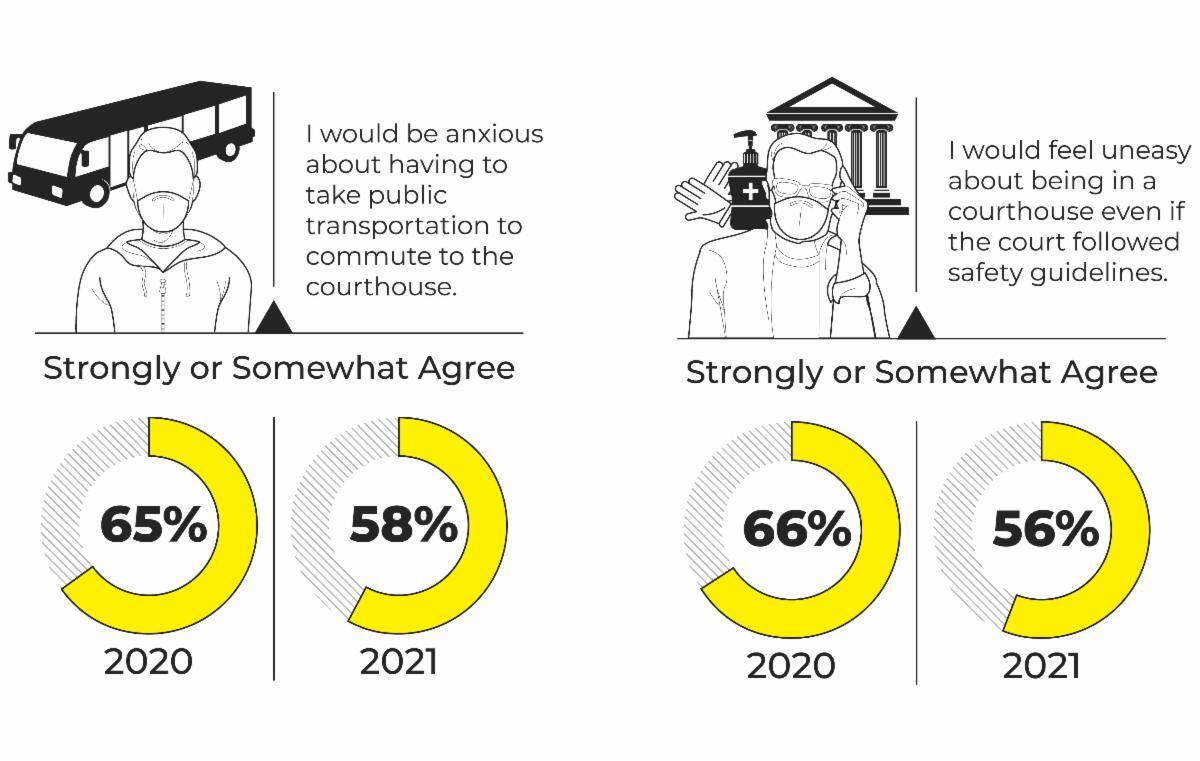
Fear about appearing in court goes beyond travel concerns. Across the country, courts have seen widespread reluctance from jurors to appear at court when summoned. Marion County, Indianapolis, has attempted to host six jury trials since March 1, but two were declared mistrials because they could not get enough jurors to fill the jury box.[6] Similarly, in Texas, Harris County District Clerk Marilyn Burgess reported that pre-pandemic, the jury appearance rates in Harris County were low, ranging from 20-23%, but post-pandemic, they have dropped even further down to 9%.[7]
DRC's recent study confirms that there is good reason to believe New York jurors will display similar reluctance, as the majority of the respondents felt it was not safe to hold jury trials at this time and only a little over half of the respondents stated they would come to court for jury duty.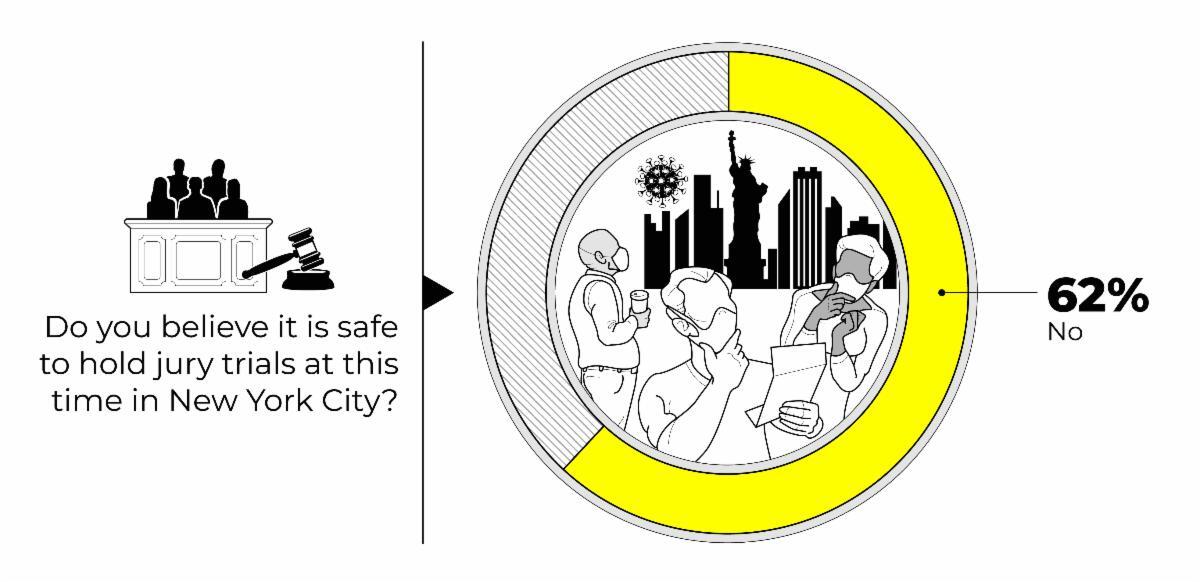
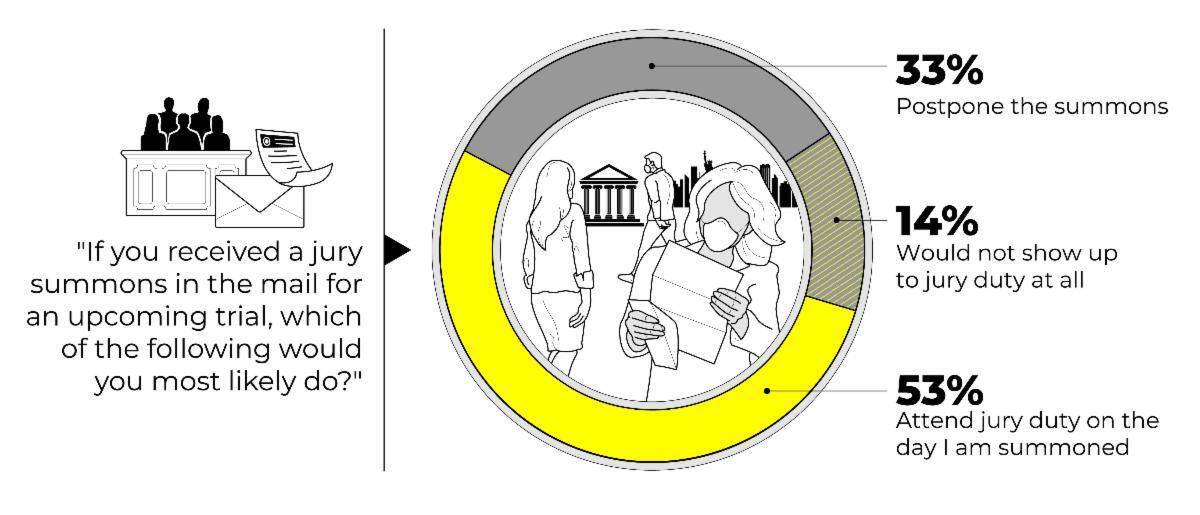
Specifically, when asked, “If you received a jury summons in the mail for an upcoming trial which of the following would you most likely do?” 53% said they would attend jury duty on the day they are summoned. Of the remaining respondents, 33% indicated they would want to postpone the jury duty summons, and 14% indicated they would not show up to jury duty at all.
In DRC’s next newsletter, we will explore the relationship between demographic characteristics, the belief that it is not safe to hold jury trials, and reluctance to appear for jury duty. These trends raise concerns that the few prospective jurors who will show up for jury duty may not constitute a representative cross-section of the venire.